A land that lives through culture: our return to dFERIA, Donostia
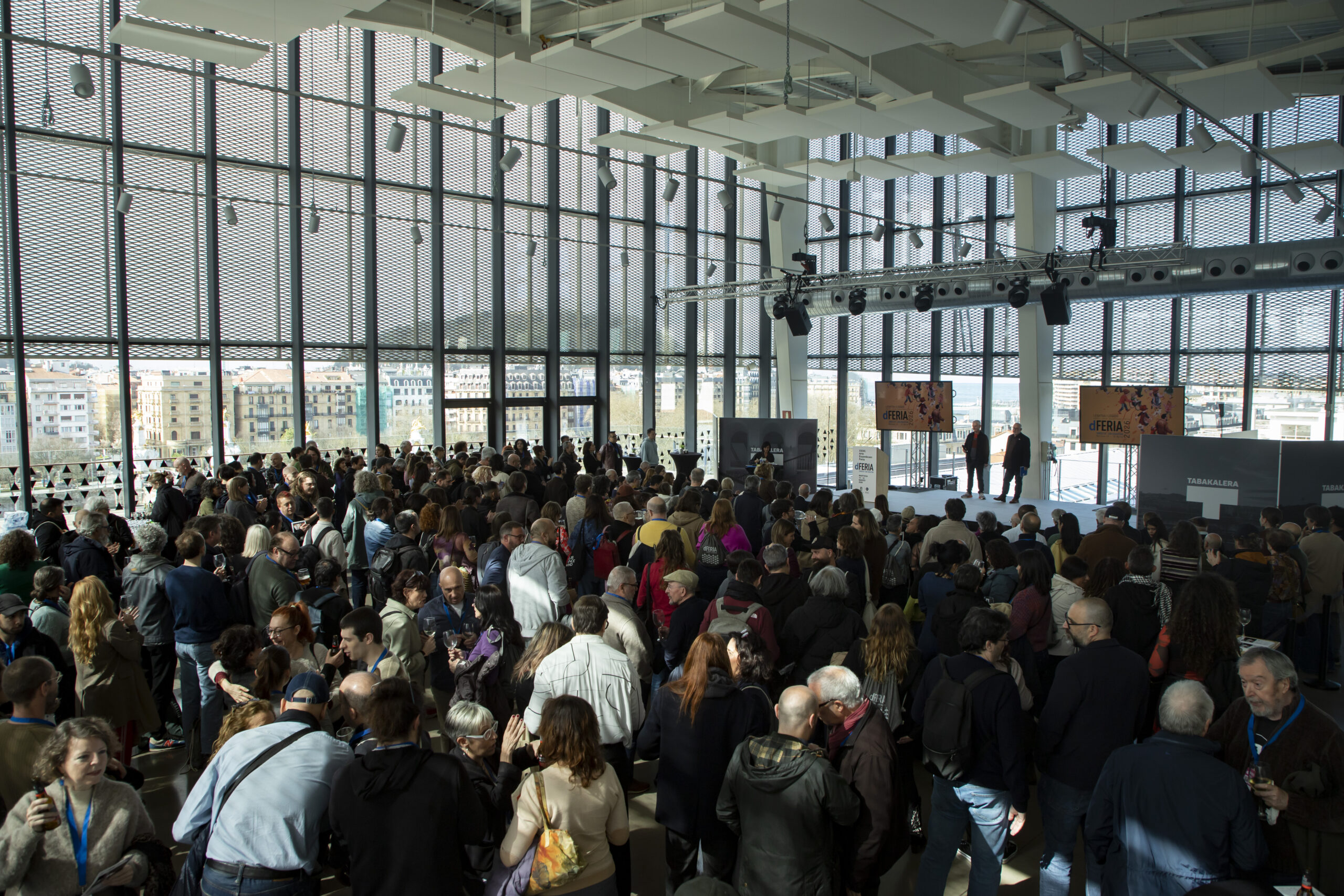
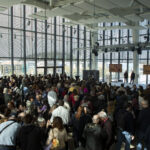
Participating in dFERIA in Donostia – San Sebastián is never just another professional trip. Each time, it feels like stepping into a space where performing arts are at the core of the vital infrastructure of society. It was for us the 3rd invitation to participate, thus carried a different kind of weight. It was about discovery, but also about continuity, relationships built over time, and the growing awareness that we as an organisation are part of a real international conversation.
In the Basque region, art has a strong identity function.
It is experience and lived, protected, and funded with a level of commitment that, when seen from Eastern Europe, can feel almost unique. And dFERIA as a cultural manifestation and infrastructure is one of the clearest expressions of this ecosystem.
Founded in 1988 by the San Sebastián City Council and Donostia Kultura, dFERIA has evolved into one of the most important reference points for performing arts professionals in Spain and across Europe. As part of COFAE, the national network of performing arts fairs, it functions as a festival and as a complex cultural market, a professional meeting ground, and an incubator for ideas.
What makes dFERIA particularly distinctive is its ability to combine a rigorous artistic selection with a genuine openness to internationalisation and experimentation. Each edition revolves around a thematic axis that shapes both the artistic programme and the broader ecosystem of talks, meetings, and exchanges. The 2026 edition continued to strengthen its position as a relevant European platform, deeply connected to the evolving global dynamics of the performing arts sector.
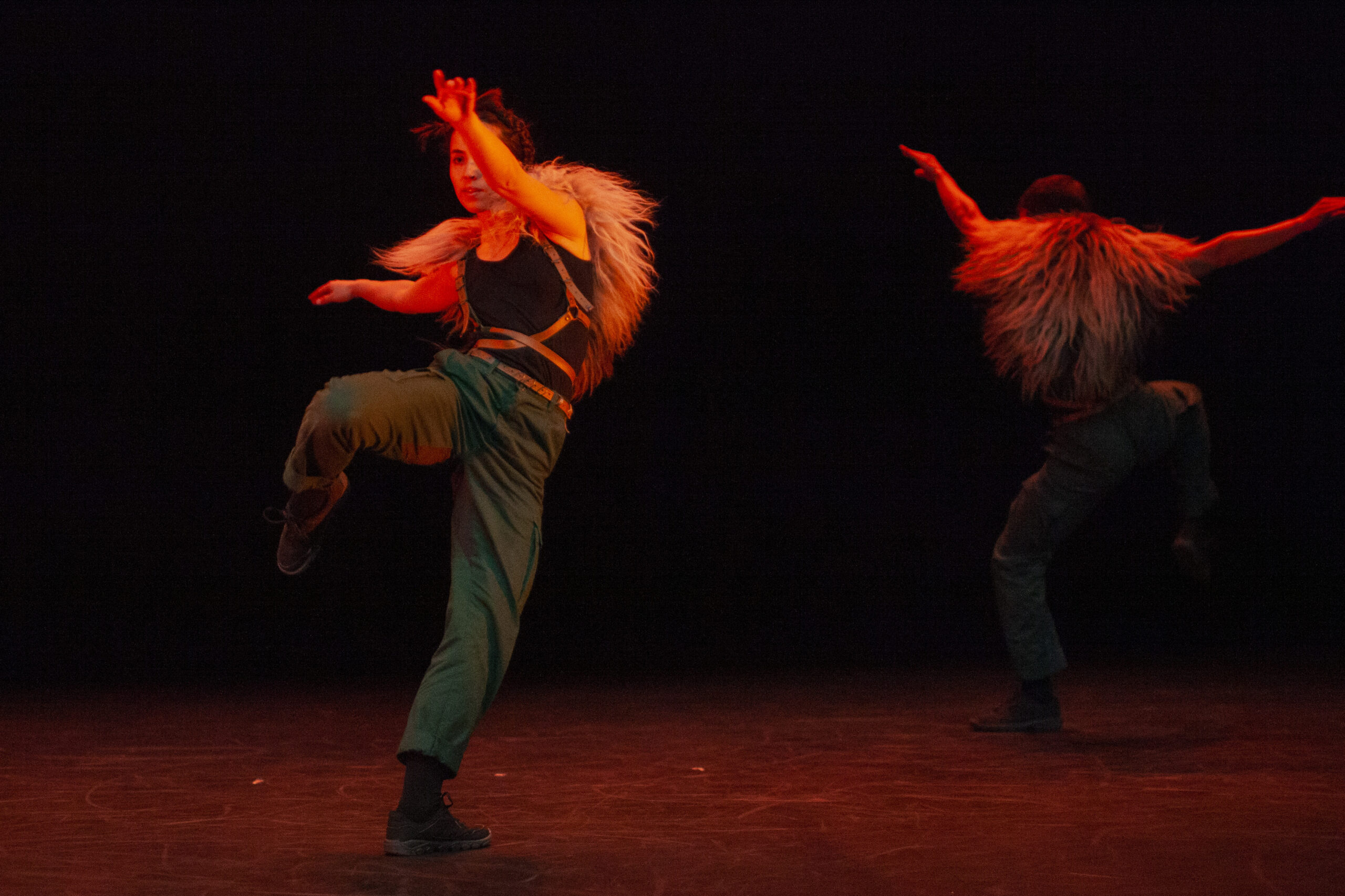
The numbers alone are impressive: nearly 16,000 attendees, over 650 accredited professionals from more than 40 countries, 31 companies presenting dozens of performances — most of them premieres. But beyond the figures, there is an energy that cannot be quantified. It is the feeling that the future of dance and theatre is not being discussed in abstract terms, but actively negotiated, tested, and built in real time.
Our presence here is not accidental. It is part of a long-term strategic effort by the Choreography Department Association to develop meaningful relationships with cultural and artistic partners worldwide and to actively engage with significant international networks. It is about understanding how the international scene is evolving and where we position ourselves within that evolution.
Participating in dFERIA was also an exercise in reflection. Romania — and Eastern Europe more broadly — still operates within a different cultural reality, with more limited resources and a fragile infrastructure. Yet, this difference becomes a driving force. It pushes you to be more attentive, more strategic, and perhaps more creative in the way you build and connect.
There is also a subtler form of learning that happens here. You observe how art is integrated into the life of the city, how audiences are educated to engage with and support culture, and how trust exists between institutions, artists, and communities. It is not a model that can simply be replicated, but one that can be deeply understood and thoughtfully adapted.
One of the aspects that struck me most deeply during this experience — and which, I believe, explains in a fundamental way why dFERIA exists in the form it does — is how Donostia uses culture as an active tool for social integration. The city, almost symbolically wrapped around the iconic La Concha beach, carries an understated elegance rooted in its past as a preferred destination for royalty and European elites. Yet over the past decades, it has undergone a profound transformation. Where culture was once associated primarily with elite consumption — festivals, casinos, events designed for a privileged class — it has now become a distributed infrastructure across the entire city, a shared language through which very different communities learn to coexist.
The old town, Alde Zaharra, with its narrow streets, churches, and bars where pintxos tell stories as layered as any theatrical performance, is perhaps the most visible expression of this multi-layered identity. But beyond its charm, what is truly remarkable is the invisible system supporting it: a coherent, intentional cultural policy deeply embedded in the life of the city. Through Donostia Kultura, culture is treated as one of the central engines of urban life, comparable in scale and importance to core public institutions.
This institution does far more than organise festivals or major events. It has built an extensive network of cultural centres and libraries across all neighbourhoods. In a city of around 186,000 inhabitants, over 112,000 are active members of this system — meaning they have direct, continuous access to cultural resources.
This fundamentally reshapes the relationship between people and art: culture is no longer something you occasionally attend, but something you live within.
More importantly, this cultural infrastructure has been deliberately designed as a tool for integration. The Basque Country, often perceived as a culturally homogeneous region with a strong identity and its own ancestral language — Euskera — has experienced significant waves of migration since the mid-20th century. First from other parts of Spain, and later from Latin America, Eastern Europe, and North Africa. Instead of allowing these differences to create deep social fractures, the city chose to respond through culture.
The Basques themselves have historically been migrants, especially to the Americas, during periods of economic hardship and political upheaval. There is a form of historical empathy that has enabled more fluid integration mechanisms. In this context, culture becomes both a neutral and fertile ground where identities are placed into dialogue.
Programmes developed by Donostia Kultura, together with departments of social action, education, and language, go beyond promoting the arts. They actively consider the needs of different social groups: workers, Chinese migrants, Latin American communities, construction workers from Eastern Europe — including Romanians. Culture is used to create spaces of encounter, expression, and, perhaps most importantly, mutual recognition.
This dimension of the city added an entirely new layer to the dFERIA experience. Because beyond performances and professional meetings, you begin to understand that this entire ecosystem does not exist in isolation. It is sustained by a coherent political, social, and cultural vision, where art is functional. It becomes a tool for cohesion, dialogue, and the construction of a more open society.
This third participation has also brought a new kind of clarity. We have become part of a network where our contribution begins to matter. Relationships built in previous editions are evolving into deeper dialogues, reciprocal invitations, and collaborative ideas that move beyond intention.
The 2026 edition of dFERIA carried an additional layer of meaning through its focused partnership with Denmark, a collaboration that felt less like a formal guest-country framework and more like a carefully constructed dialogue between two cultural ecosystems that, at first glance, might seem quite different, yet share a deep commitment to artistic rigour, public engagement, and long-term cultural thinking.
Denmark’s presence was embedded throughout the programme, in performances, professional encounters, and the subtle ways in which conversations were shaped around sustainability, artistic experimentation, and new institutional models. What became visible, especially in discussions with Danish programmers and artists, was a particular clarity of vision — a way of approaching the performing arts as both an aesthetic and a civic practice, something that resonates strongly with the broader direction dFERIA has been cultivating in recent years. In this sense, the Danish presence at dFERIA 2026 did more than enrich the programme. It expanded the horizon of the fair itself, reinforcing its role as a space where Europe is actively negotiated — through art, through dialogue, and through the ongoing effort to imagine what a shared cultural future might look like.
dFERIA is not just a fair. It is a living organism, shaped by the people who move through it. It is a place where you realise that art is a shared language. And that, beyond cultural or geographical differences, there is a deep human need to tell stories, to create meaning, and to build together.
Each time we return from here, we carry more than contacts or ideas, we carry the confirmation that what we are doing matters. And that there is a place for us within a cultural landscape that is far larger than we sometimes allow ourselves to imagine.